The Intelligence Advantage: How Data-Driven Holding Companies Outperform Across Their Portfolios
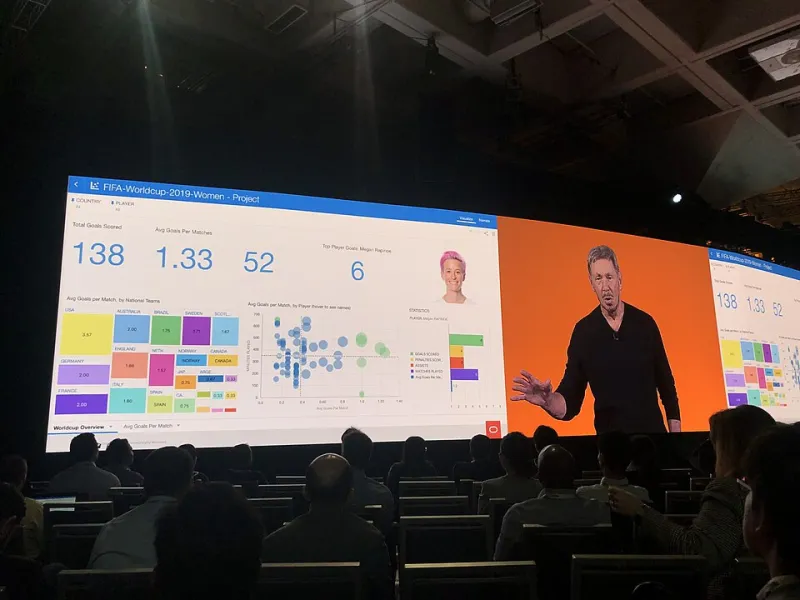
Photo: GeneralAB13, CC BY-SA 4.0, via Wikimedia Commons
For decades, the central challenge of managing a diversified corporate portfolio was informational. Executives at the holding company level were perpetually dependent on subsidiary reports that arrived late, used inconsistent definitions, and reflected the priorities of local management rather than enterprise-wide strategic needs. Decisions about capital allocation, leadership changes, and market expansion were made with incomplete pictures and significant lag time.
That reality is changing. The emergence of scalable business intelligence platforms, cloud-based data infrastructure, and predictive analytics tools has fundamentally altered what is possible for holding companies managing multiple business units. Organizations that invest in unified data capability are not simply improving their reporting—they are building a structural competitive advantage that compounds over time.
From Reporting to Real Intelligence
There is an important distinction between data reporting and data intelligence, and holding companies that conflate the two tend to underinvest in the capabilities that actually drive performance improvement.
Traditional reporting answers historical questions: What were revenues last quarter? How did operating margins compare to the prior year? These are useful inputs, but they describe the past. They do not help a corporate leadership team anticipate where a subsidiary is heading, identify emerging risks before they become material, or recognize operational patterns that suggest systemic inefficiency.
Business intelligence, properly deployed, does all of those things. It transforms raw data from across the portfolio into forward-looking insights—flagging anomalies in real time, modeling the impact of strategic decisions before they are made, and surfacing benchmarking comparisons that individual business units would never generate on their own.
For a holding company managing subsidiaries across different industries or geographies, this shift from retrospective reporting to prospective intelligence is not incremental. It is transformational.
Benchmarking Across Diverse Operations
One of the most immediately valuable applications of unified data infrastructure is cross-portfolio benchmarking. When a holding company can compare performance metrics across subsidiaries—even those operating in different sectors—it gains access to insights that no single business unit could develop independently.
Consider a corporate group with subsidiaries in logistics, professional services, and light manufacturing. On the surface, these businesses appear too different to benchmark against each other in any meaningful way. But at the operational level, they share common metrics: revenue per employee, overhead as a percentage of gross profit, customer acquisition cost, and retention rates, among others. When these figures are tracked consistently across the portfolio and visualized through a common intelligence platform, outliers become visible almost immediately.
A subsidiary performing significantly below the portfolio average on revenue per employee is not necessarily failing—but it warrants examination. Is the gap explained by industry norms? By a deliberate investment in headcount ahead of growth? Or does it reflect a structural inefficiency that management has not yet addressed? The benchmark creates the question; the subsequent analysis provides the answer.
This kind of cross-portfolio visibility is effectively impossible in a holding company that relies on siloed reporting systems and manual data consolidation. It requires investment in shared data architecture and standardized metric definitions—but the return on that investment, in the form of earlier and more accurate decision-making, is substantial.
Predictive Analytics and Market Entry Decisions
Beyond operational monitoring, data analytics is reshaping how holding companies approach strategic decisions—particularly those involving market entry, acquisition targeting, and portfolio expansion.
Predictive models built on a combination of proprietary portfolio data and external market signals can substantially improve the quality of these decisions. When ABK Companies evaluates a potential market for one of its subsidiaries, the analysis is no longer limited to static market research reports and management intuition. It incorporates performance data from comparable market entries in the past, customer behavior patterns from existing operations, and macroeconomic indicators that have historically correlated with success or difficulty in similar contexts.
The result is not certainty—no model eliminates strategic risk—but it is a materially better-informed starting point. Decisions that once relied heavily on executive judgment are now supported by quantitative frameworks that make the assumptions explicit and the tradeoffs visible.
This is particularly valuable in a diversified holding company context, where corporate leadership must evaluate opportunities across industries they may not know intimately. Data intelligence creates a common language for strategic evaluation that transcends sector-specific expertise.
Preserving Autonomy While Enabling Oversight
A concern that frequently arises in discussions of centralized data infrastructure is the risk of undermining subsidiary autonomy. If corporate leadership can monitor every operational metric in real time, does that create a surveillance culture that discourages local initiative and burdens subsidiary management with excessive reporting demands?
This is a legitimate tension, and holding companies that handle it poorly do create exactly the dynamic they were trying to avoid. The solution lies in how the data infrastructure is designed and governed.
Effective data architecture for a diversified portfolio draws a clear distinction between visibility and control. Corporate leadership needs visibility into key performance indicators across the portfolio—not granular oversight of every operational decision. Subsidiaries should contribute standardized data to the shared infrastructure without being required to restructure their internal systems around corporate preferences.
When this balance is maintained, the shared data environment actually reinforces rather than undermines subsidiary autonomy. Business unit leaders gain access to benchmarking data and portfolio-wide insights they would not otherwise have. They can see how their operations compare to peers, identify best practices from other parts of the portfolio, and make a stronger case for capital investment when their data tells a compelling story.
At ABK Companies, our approach to data governance is built on this principle. We invest in the infrastructure that makes portfolio-wide intelligence possible, while ensuring that each business unit retains meaningful control over its own operational decisions. The data flows upward to inform strategy; it does not flow downward to micromanage execution.
Building the Infrastructure That Makes It Possible
For holding companies that have not yet made significant investments in unified data capability, the path forward begins with a few foundational commitments.
First, standardize the metrics that matter most across the portfolio. This does not require every subsidiary to adopt identical reporting systems—it requires agreement on a core set of definitions and measurement approaches that make cross-portfolio comparison valid.
Second, invest in a data integration layer that can pull information from disparate source systems and present it in a consistent format. Cloud-based business intelligence platforms have made this substantially more accessible and cost-effective than it was even five years ago.
Third, build the analytical capability—either internally or through external partnerships—to move beyond dashboards and toward genuine predictive intelligence. Dashboards describe; analytics prescribe.
The holding companies that make these investments now are not simply improving their operational efficiency. They are building an intelligence advantage that will define competitive performance across their portfolios for years to come. In a diversified business environment, the ability to see clearly across all of your operations—and to act on what you see—is not a luxury. It is a prerequisite for sustained growth.